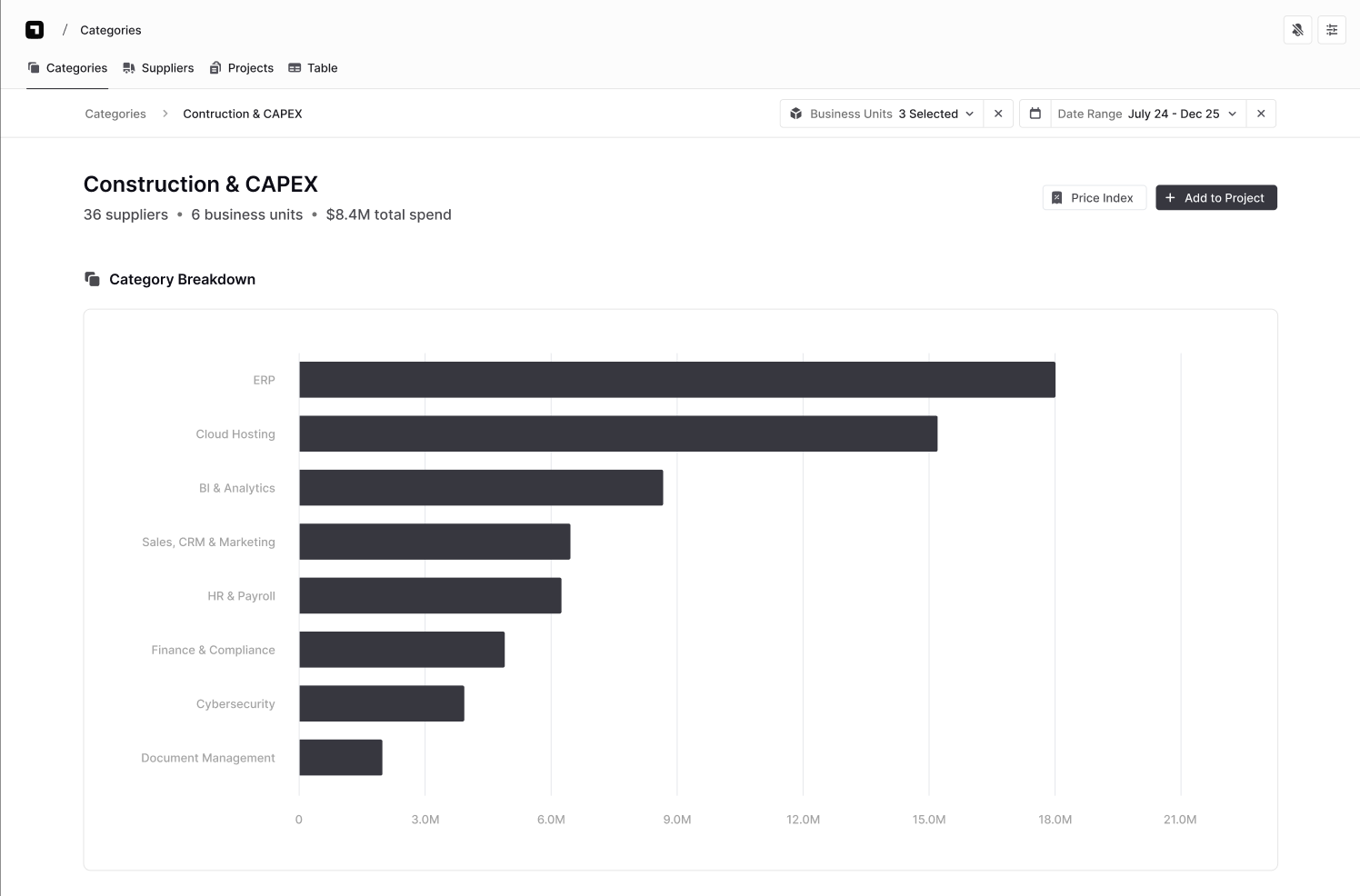
Most procurement teams can generate spend reports within minutes. They can slice data by category, supplier, business unit, and time period. Yet these same teams still get blindsided by supplier failures, miss cost reduction opportunities, and struggle to defend budget decisions to finance executives.
Traditional spend analytics tells you what happened. Procurement intelligence tells you what's about to happen and what you should do about it. The difference lies in combining internal spend data with external market signals, supplier risk indicators, and predictive analytics to shift from reactive reporting to proactive decision-making.
Why traditional spend reporting leaves procurement teams reactive
Procurement teams spend significant time generating reports that document decisions after they've already been made. These dashboards answer how much you spent with a certain supplier last quarter, but not whether you should consider consolidating suppliers before Q3 contract renewals. Finance teams request reports showing historical variance, but can't use them to challenge upcoming budget allocations.
This creates specific failure modes that undermine procurement's strategic value:
Visibility without context: You know you spent €2.3M with a supplier, but not that their primary manufacturing facility is in a region with escalating geopolitical risk.
Lagging indicators only: Spend increased 12% year-over-year, but you don't know if that's above market rate or if competitors negotiated better terms.
Disconnected data sources: Supplier performance data lives in one system, contract data in another, market benchmarks in spreadsheets, risk signals scattered across news alerts.
When CPOs can't defend procurement decisions with forward-looking data, CFOs default to generic cost-cutting mandates that damage supplier relationships and operational continuity. The reporting treadmill continues, but strategic influence remains elusive.
What procurement intelligence actually means—and key components
Procurement market intelligence moves beyond historical reporting by integrating three distinct data layers that most organizations already have, but rarely connect.
1. Internal spend intelligence starts with granular transaction data, but proper classification matters more than volume. AI-powered spend intelligence catches misallocated expenses that typically sit hidden in the wrong categories, combining this with contract terms, compliance metrics, and supplier performance history to create a complete internal picture.
2. External market intelligence provides the context that spend data alone can't offer:
- Real-time commodity pricing and forex fluctuations from sources like the European Central Bank
- Competitive benchmarking showing what similar organizations pay for comparable goods and services
- Regulatory changes affecting procurement, from CSRD compliance requirements to supply chain due diligence directives
- Supplier financial health and competitive market position
3. Predictive signals turn historical patterns into forward-looking guidance. This includes supplier risk indicators like financial stress or operational disruptions, demand forecasting based on business growth patterns, contract renewal timing aligned with favorable market conditions, and category-specific dynamics, including supply constraints or pricing trends.
The integration challenge
Most organizations already possess pieces of this data—scattered across ERPs, contract management systems, supplier portals, and analyst subscriptions. Traditional business intelligence tools show you dashboards. Intelligence platforms surface specific actions, such as these three contracts renew in Q2 when market prices are forecast to drop—delay renewals by 8 weeks to capture savings.
The shift in decision making, from "what happened" to "what should we do"
The difference between reporting and intelligence becomes clearest in how teams respond to supplier issues.
What happened approach: With traditional reporting, you discover a 23% cost increase with a critical supplier during quarterly spend review. By the time finance asks why, you're explaining what went wrong instead of preventing it.
What should we do approach: With procurement intelligence, your platform flags that a critical supplier's parent company just reported restructuring plans, their credit rating dropped, and two smaller clients recently shifted to competitors. You receive an alert weeks before contract renewal with three alternative suppliers already vetted for financial stability, pricing competitiveness, and capacity. You negotiate from a position of strength, not desperation.
Specific use cases that change procurement's strategic value
Proactive cost reduction (without supplier tension)
Intelligence identifies duplicate spending across business units before budget planning begins. Market data indicate declining pricing trends across EU markets—the platform recommends delaying bulk purchases to secure better rates. Predictive analytics surfaces consolidation opportunities that qualify you for volume discounts without concentrating risk.
Risk mitigation that finance teams value
Early warning systems detect supplier financial distress months before visible failure. Geographic risk mapping shows supply chain exposure to regulatory changes like the EU deforestation regulation. Contract renewal calendars align with market conditions, timing renewals for buyer-favorable windows.
Budget defense with quantified justification
Instead of "we need to increase procurement budget 8%," you present: "Market intelligence shows raw material costs rising across our top three categories. We've identified €850K in savings from supplier consolidation and contract timing optimization, netting a 4% budget increase while maintaining supply continuity."
What changes with intelligent procurement
Moving to intelligence-driven procurement fundamentally changes how the function operates and how it's perceived by leadership.
Decision cycles compress dramatically. Traditional approaches require weeks from identifying problems to validated solutions. Intelligence-driven teams move from alert to recommended action in hours because data is already integrated and analyzed.
Credibility with finance shifts from defensive to strategic. Procurement moves from explaining why costs increased due to market conditions to presenting quantified alternatives: "We benchmarked against 40 similar organizations, and our rates are below median—here's the data."
Relationship management becomes proactive rather than reactive. Instead of emergency calls when suppliers fail, procurement teams have strategic conversations about capacity planning, innovation partnerships, and mutual risk mitigation.
Most importantly, procurement stops being the team that explains variances and becomes the function that prevents them. The strategic shift moves from cost management to value creation.
Intelligence vs. more reports
Adding another dashboard won't solve procurement's credibility problem. Finance teams don't need more historical spend breakdowns. They need confidence that sourcing decisions are based on complete, current, and predictive data.
The organizations building procurement intelligence capabilities aren't doing it to generate better reports. They're doing it to shift from reactive cost management to proactive value creation. That means combining internal spend data, external market signals, and predictive analytics into specific, defensible actions.